
Precision fermentation · R&D
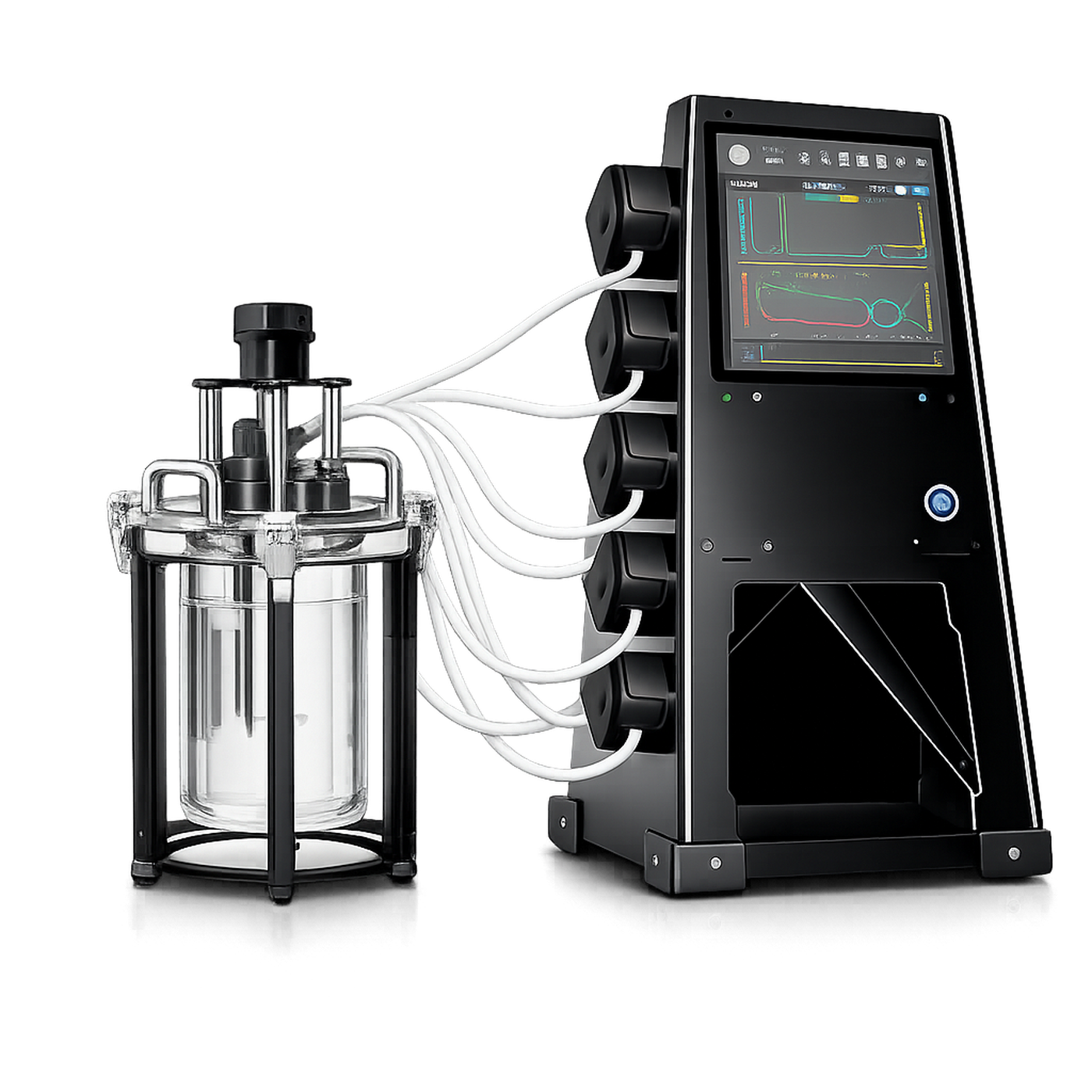
Genesys V1. Control the process.
A compact research bioreactor platform for precision fermentation, integrating vessel operation, sensors, pumping, control and usable data in one operating environment.
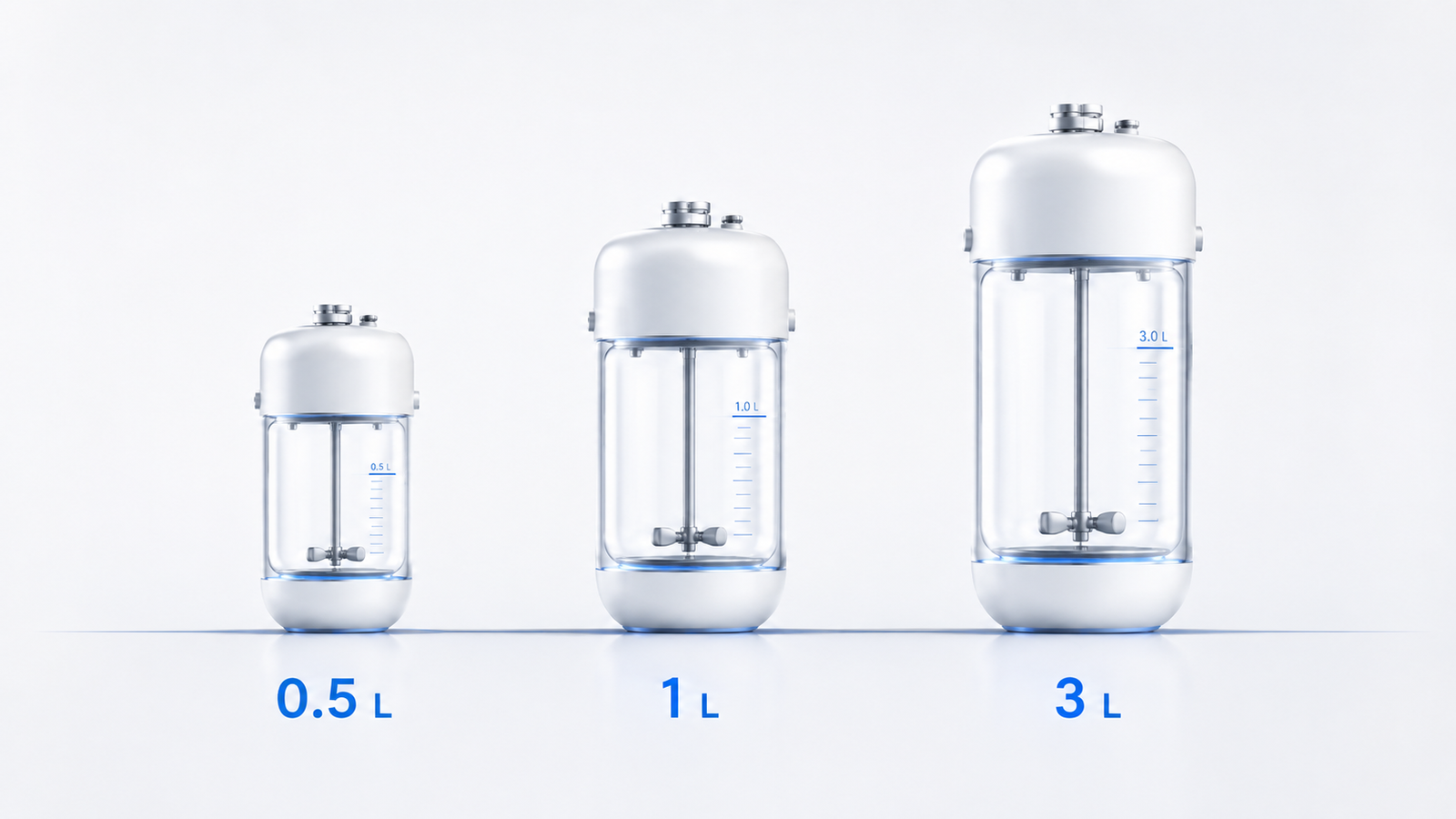
One platform · Three vessel sizes
Change process volume. Keep the workflow.
Adapt working volume without rebuilding the control platform, sensor environment, software or operating procedures.
Control architecture
Critical variables. One operating environment.
Genesys V1 combines sensing, setpoints and controlled process actions inside one compact fermentation platform.
The product is more than a vessel. Control, pumping, oxygenation and data remain connected to the fermentation workflow.
Sense · control · act · recordHardware architecture
Three physical systems. One laboratory platform.
Genesys V1 combines the control unit, reactor unit and sensor environment instead of requiring a fragmented setup.
Control + pumping
The touchscreen control unit houses the electronics and peristaltic pump set.
Vessel + agitation
Jacketed borosilicate vessel with agitator, oxygenation and process connections.
Measurement + feedback
Core fermentation variables are measured and connected to the control strategy.
Designed for laboratory workflows
Less setup friction. More attention on the process.
Tool-free access, magnetic agitation, integrated pumping and Ethernet connectivity simplify recurring laboratory work.
Tool-free vessel + sensors
Open the vessel and mount or remove sensors without a tool-dependent sequence.
Magnetic agitator mounting
Mount and remove the agitator / oxygenator through the manufacturer-described magnetic system.
Integrated process pumping
Acid, base, antifoam, feed, filling, emptying and sampling functions remain close to the vessel.
Touchscreen + Ethernet
Operate at the unit or access its control web through the assigned network environment.
Control software + usable data
Run the process. Improve the next cycle.
Operate from the touchscreen or through a browser connection, review real-time graphs, preserve cycle history and export data for downstream analysis.
Technical profile
Qualify the fit. Then configure the application.
Start with the specifications that determine whether Genesys V1 belongs in the technical conversation, then expand the full profile.
Full technical profile
Process + vessel
Pumping system
Control + installation
Integrated utilities
Sensor architecture
Measure what drives the fermentation.
The technical sheet defines detection ranges and accuracy for the core sensing environment.
Temperature
pH
PO₂
Foam
Hamilton compatibility. Genesys V1 is described as directly compatible with Hamilton autoclavable pH and dissolved-oxygen sensors using Modbus. An additional customer sensor can also be considered.
Autoclavable · ModbusApplication configuration
Standard platform. Application-specific options.
The source material indicates that selected customizations can be considered according to the application.
Application review
Is Genesys V1 the right configuration for your process?
Three technical inputs are enough to start a qualified discussion.
Discuss an application